Anatomy turns a question into a detailed object you can play with. Ask how a rocket engine works and you get one that fires and comes apart when you hover.
You commented DIAGRAM. Here's how to install it in 2 minutes, plus 8 prompts to try first.
Free and open source (MIT) · 21,000+ GitHub stars in under 3 weeks · made by Ryan
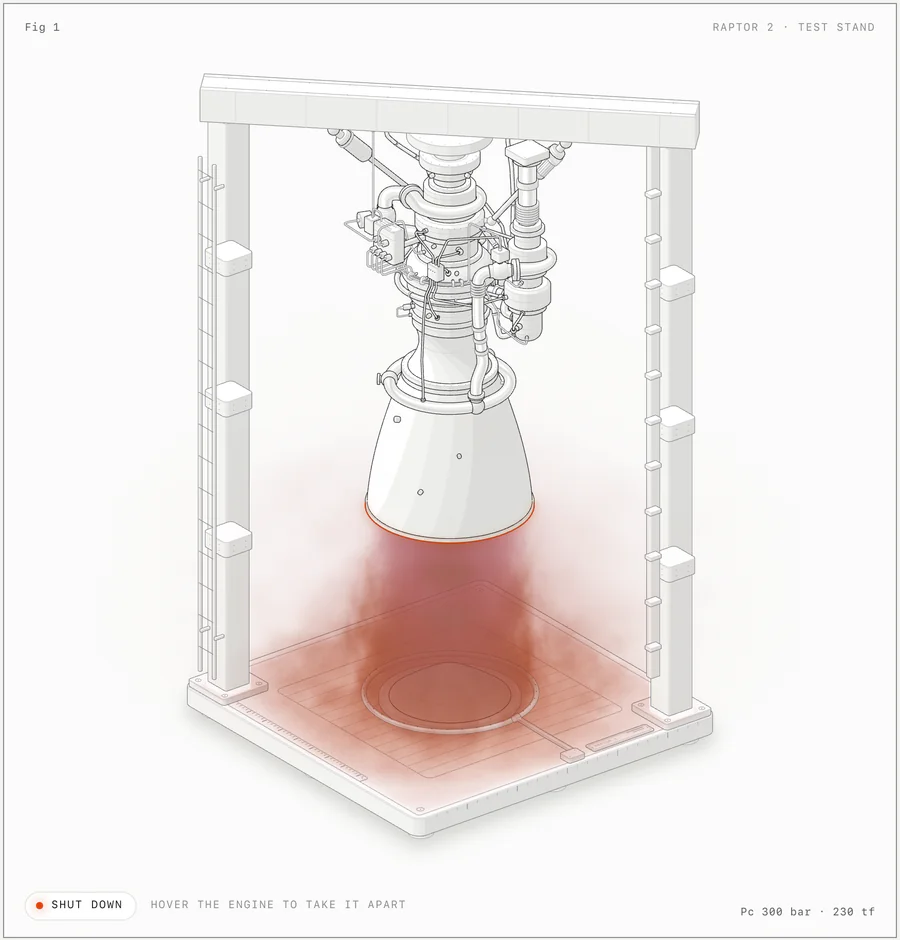
Drawn by Anatomy. The plume is a live shader inside the drawing.
Why it beats normal AI diagrams
Most explanations are a wall of text or a few boxes and arrows. Anatomy invents a physical machine whose working is the idea, builds it from dozens of small shaded parts, makes it move, then zooms in on every joint and checks its own work before it hands it over.
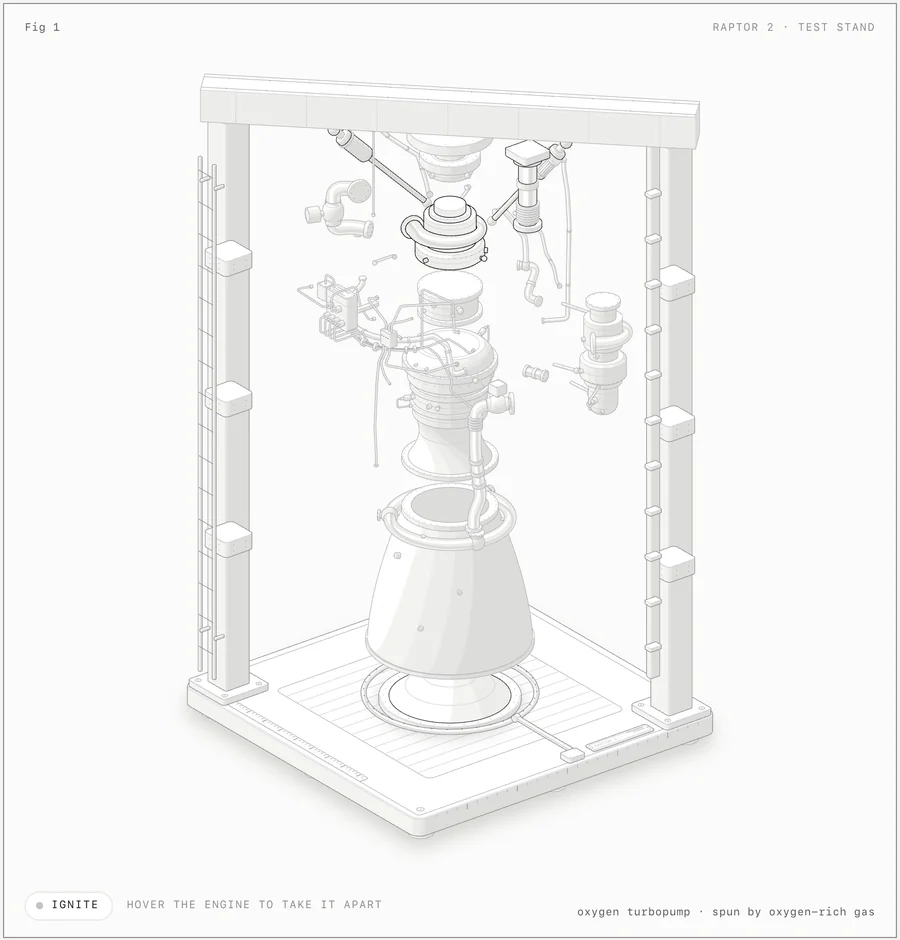
Raptor engine, taken apart into 11 assemblies on hover.
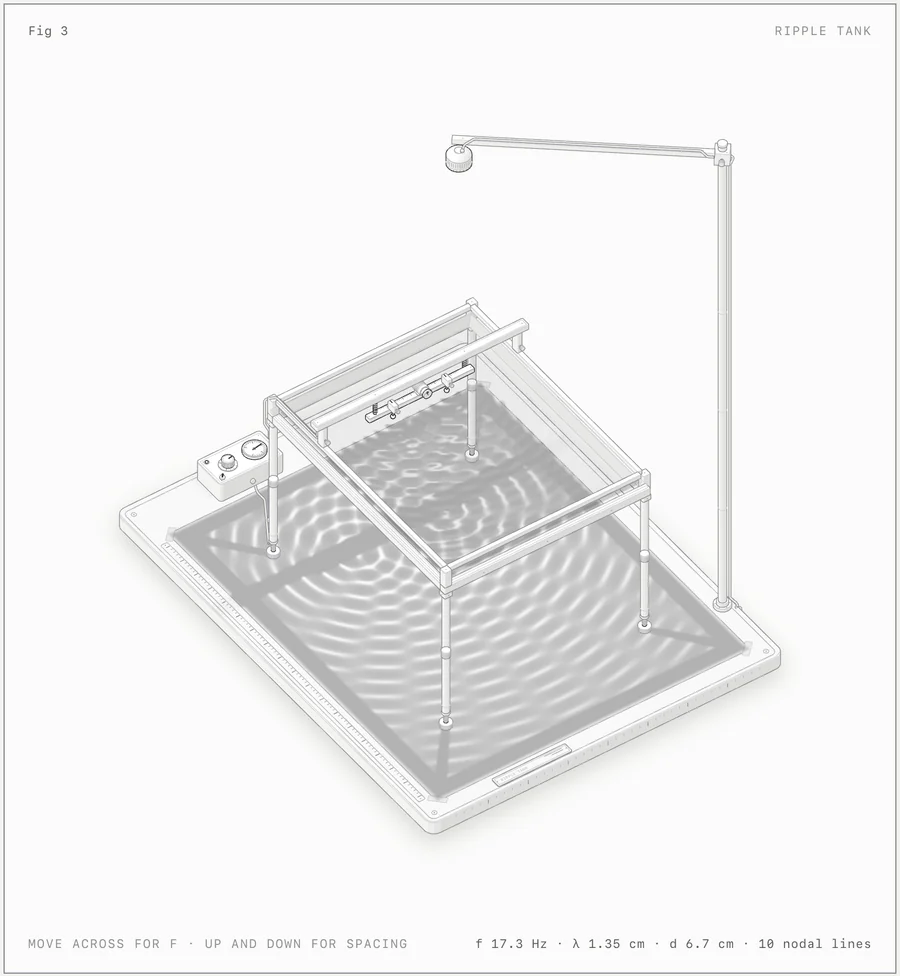
Ripple tank, with light and waves drawn by a shader.
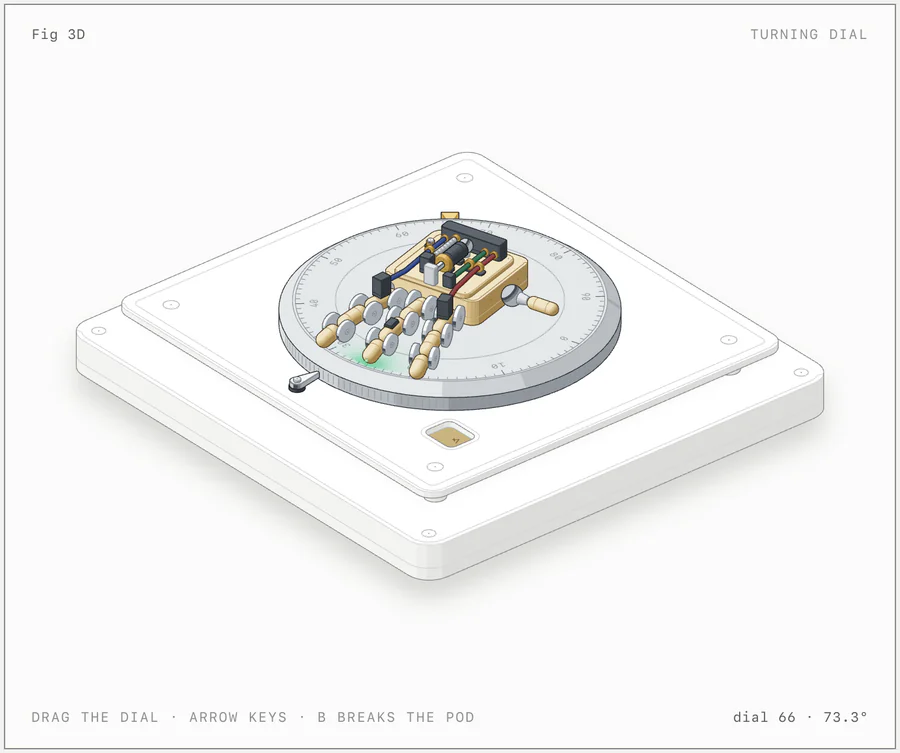
Combination dial in the 3D mode (beta). Drag to turn it.
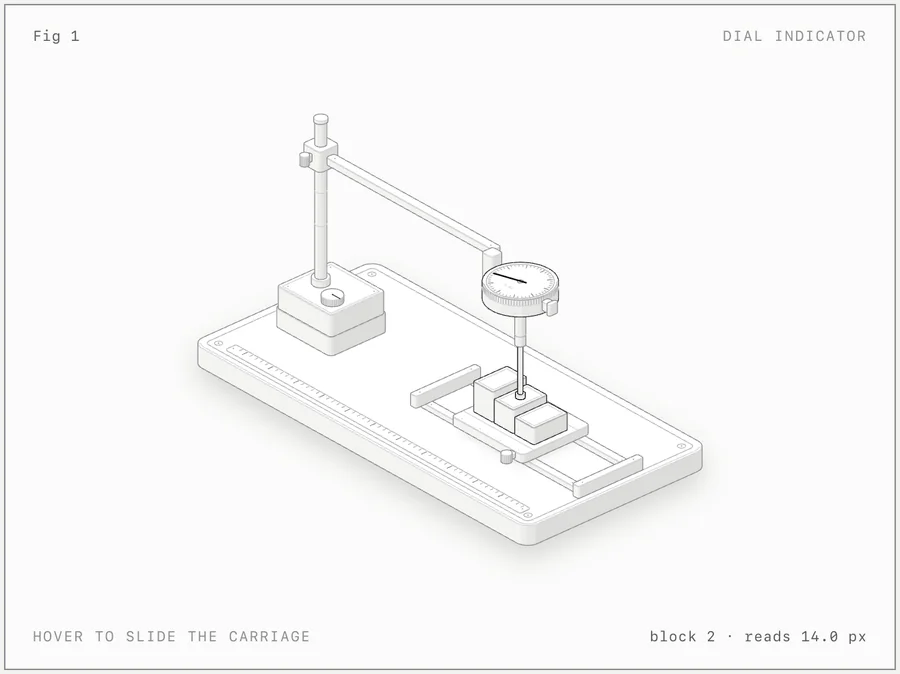
Dial gauge. Hover to slide the blocks, the needle reads each one.
Drawings
Solid isometric parts with a live readout and smooth motion. Comes out as a web page, an SVG file or a React component.
Drawings with effects
Fire, exhaust, water, light and steam drawn with a shader that sits inside the picture.
3D (beta)
Parts that turn, flex or break off in true 3D, like a dial you can spin.
Install it in 2 minutes
Check you have the basics
You need Claude Code, Node.js 20.10 or newer (from nodejs.org) and Chrome, which it uses to check its own drawings. No API keys and nothing else to install.
Run one command
Paste this into your terminal. It installs the skill for every project.
In your terminal
npx skills add wheresryan22/anatomy -g -a claude-code
Open Claude Code and type /anatomy followed by what you want explained. You can also just ask for an “interactive explainer” or “isometric illustration” and Claude picks the skill up on its own.
8 prompts to try first
The first two are from the reel. The last four come from the skill's own test prompts.
The rocket engine from the reel
/anatomy a Raptor-style rocket engine in a test stand that fires, and comes apart into its main assemblies when I hover. Standalone HTML, light theme.
Forge and hammer, step by step
/anatomy explain how a blacksmith forges a blade: the forge heats the bar, the hammer shapes it, then quenching hardens it. Animate each step and show the temperature as a live readout. Standalone HTML.
Your own code
/anatomy read this project and explain how a request moves through it, from the login page to the database and back. Invent a physical machine whose working is the flow, with each part labelled after the real file it stands for. Standalone HTML.
Rate limiter (from the skill's own examples)
/anatomy explain how a token bucket rate limiter works, interactive
Espresso machine
/anatomy a heat-exchanger espresso machine with the side panel off: boiler, heat-exchanger tube, group head, pump, steam wand and gauge. Show the water flowing when you pull a shot. Standalone HTML, light theme.
How a website cache works
/anatomy an isometric SVG explaining how a CDN edge cache works, cache hit vs miss, TTL of 60 s, for a dark landing page. Just the SVG file and a PNG preview.
Bunsen burner with a real flame
/anatomy a Bunsen burner on a lab bench: opening the air collar turns the lazy yellow flame into a roaring blue cone. WebGL for the flame, one HTML file, dark theme.
A figure for your docs
/anatomy a figure for our docs on database connection pooling: a pool of 10 connections, requests borrow one and give it back, and when all 10 are busy new requests wait in a queue. A React component plus a static HTML preview, dark theme.
3 habits for the best figures
Name the idea, not the drawing
Say what it should explain and give real numbers: sizes, counts, rates. Let it invent the object.
Or name the object
If you already know the machine you want, say so, and say what should move.
Say where it will live
A web page, an SVG file or a React component, light or dark. Each one is built differently.
Good to know
How long does a figure take?
A few minutes, on purpose. It writes a parts list, builds the geometry, then checks close-ups of every joint before it's done. A big 3D figure can take 15 to 20 minutes to check.
What can't it draw?
It draws machines, instruments, tools and furniture. Not people, exact maps or data charts. An idea with no mechanism to build comes out weaker.
Is it free?
Yes. It's open source under the MIT license. You only pay for your Claude plan as usual.
Can I share what I make?
Yes. Ask Claude to “publish this figure to the Anatomy community gallery” and it opens the submission for you after you approve it. The figure is yours to use on your own site or docs too.
Drop your email for the 2-minute install, 8 prompts to try first and the habits that get the best figures. Plus every other resource in the library. Free, one email a week, unsubscribe anytime.
Moshn / AI automation agency
Want AI automation built for your business?
Moshn builds AI systems around the tools your team already uses, from lead qualification and follow-ups to onboarding and reporting.
Book a call. Tell us what your team is doing manually, and we'll show you what can be automated.